
Local SEO Ireland: Small Business Guide 2026
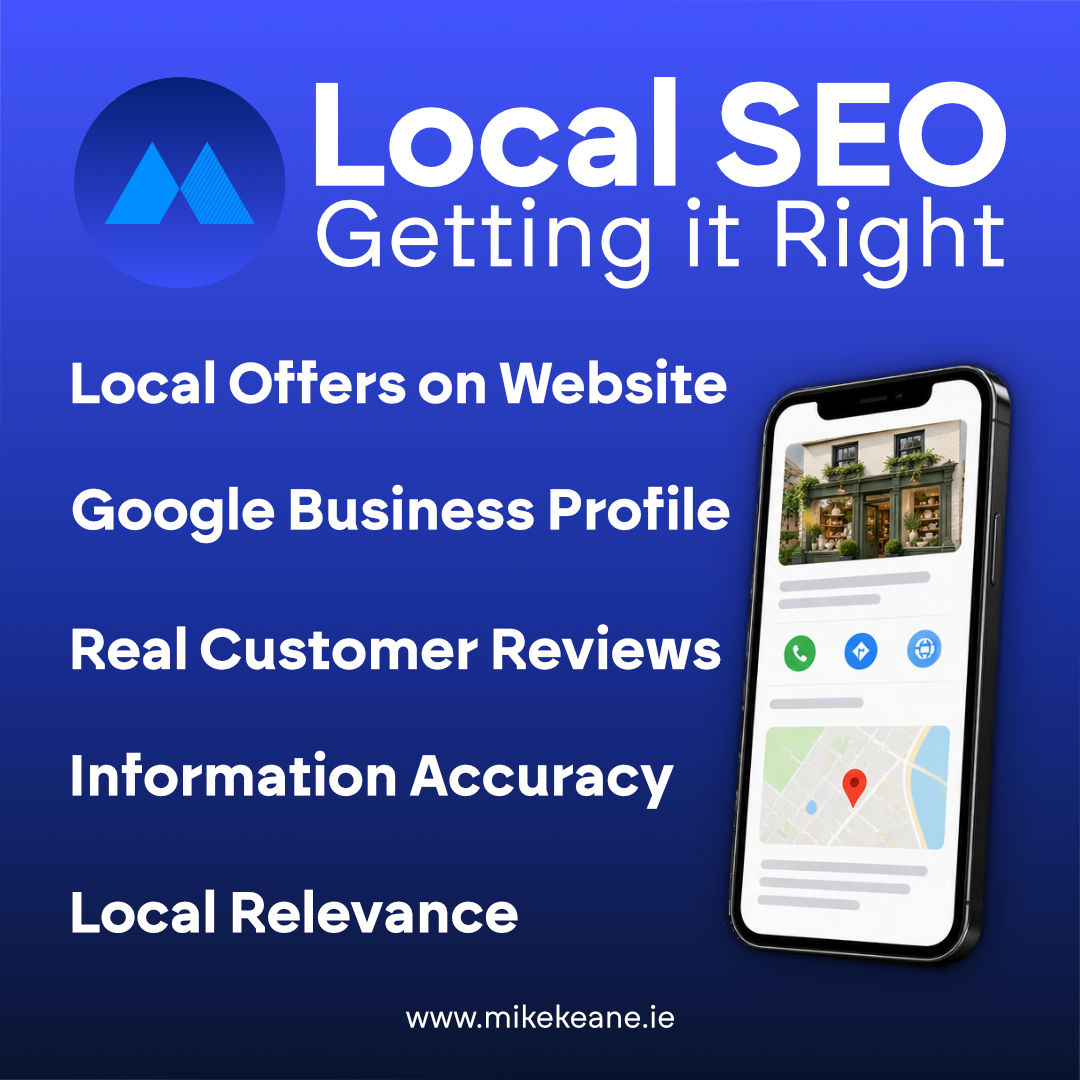
Local SEO for Irish Businesses: What Moves the Needle in 2026
If your business depends on customers in a particular town, county or service area, local SEO should help those people find you and take the next step. That might mean calling a plumber, visiting a kitchen showroom or booking a dental appointment.
The challenge with local SEO in Ireland for a small business is deciding which improvements deserve your limited time. A longer checklist is not necessarily a better plan.
My advice is to start with accurate business information, a useful Google Business Profile and website pages that clearly explain your services. Then build genuine evidence of your work and measure the enquiries that follow.
1. Understand What Google Means by Local Relevance
Google describes local rankings in terms of relevance, distance and prominence: how closely your business matches the search, how near it is to the searcher and how well known it is.
You can improve how clearly you explain your business and strengthen its online presence. You cannot optimise away the distance between your premises and a customer.
That matters for Irish businesses serving several counties. A Cavan installer working in Meath and Longford should explain that coverage clearly, without assuming the business will appear equally prominently on Maps throughout all three counties.
My advice: choose a realistic starting area
Pick your priority services and the places where winning work makes commercial sense. Research the actual businesses appearing for those searches. Competition varies by service and location; a smaller town is not automatically an easy market.
2. Get Your Google Business Profile Right
For searches with local intent, customers may encounter your map listing before visiting your website. Treat the profile as a place where someone makes a decision about contacting you.
Check your main category, services, opening hours, phone number and website link. Use current photographs that show your premises, products or completed work.
Google recommends complete, accurate profile information. Keep your business name faithful to your real-world branding rather than adding services and towns to chase searches.
If you visit customers rather than receive them at your address, use the appropriate service-area setup. A rented mailing address where you do not operate is not an eligible business location.
My Google Business Profile Optimisation service focuses on the profile itself, with practical improvements and maintenance recommendations.
3. Make Your Website Support Your Local Offer
Your profile and website should tell a coherent story. A profile advertising bathroom installation should link to a website that explains that service, shows relevant work and makes requesting a quote straightforward.
Give important services their own useful pages when they need different information. A retailer offering flooring, blinds and curtains should consider whether one general page answers each customer’s questions adequately.
On each priority page, explain what you offer, who it suits, where you work and what happens next. Add relevant project photographs, useful FAQs and an obvious contact option.
My SEO services connect these content improvements with the technical work needed to help search engines discover and understand your pages.
Also check that important pages are indexed, usable on a phone and linked from your main navigation or related content. If a customer cannot find the right page or complete your form, extra search visibility will not solve that problem.
4. Use Town and County Pages When They Add Value
A location page should earn its place on your website. Replacing “Navan” with “Trim” in otherwise identical copy does little to help someone choose your business.
Useful local information could include:
- Completed projects in that area, with permission to share them.
- Delivery arrangements, installation coverage or travel limitations.
- Genuine customer questions about accessing your service.
- Showroom directions or appointment arrangements, where relevant.
For example, a kitchen installer serving Meath could explain its survey process and show an actual local installation. That is more useful than listing nearby landmarks with no connection to the work.
Google’s spam policies warn against doorway pages created around similar searches without providing useful destinations.
My advice: improve existing pages first
Start with the pages most likely to generate valuable enquiries. Create additional location pages when you have enough relevant information to make them useful.
5. Build a Steady Habit of Asking for Reviews
Reviews help potential customers judge what working with you might be like. Google also identifies review numbers and positive ratings as factors that can help local ranking.
Ask customers for an honest review after a completed job or purchase. Make the process easy with your review link, and respond professionally to feedback.
Avoid offering discounts for reviews or asking only customers you expect to leave five stars. Google requires reviews to reflect genuine experiences.
Recent feedback can reassure customers that your business is active, but there is no reliable rule that 15 newer reviews will outperform 40 older ones.
My advice is to build a sustainable routine. Useful, authentic feedback is a better objective than chasing a particular review count.
6. Keep Business Details Accurate Across Important Listings
Check your business name, phone number, address where applicable and website link across your own site, Google and relevant listings.
An old phone number on Golden Pages or an outdated showroom address can send customers to the wrong place. Correct those obvious conflicts before spending hours creating new listings.
For an Irish business, useful places to check might include a local Chamber, supplier directories or relevant tourism and trade listings.
Consistency should mean accurate business information, not anxiety about every punctuation difference. Do not publish a private address simply to make directory entries match when customers are not served there.
7. Earn Relevant Mentions Through Real Business Relationships
Think about the organisations already connected with your business: suppliers, trade associations, community partners and local publications.
A supplier’s stockist listing or a project feature may introduce relevant customers and provide a useful link to your website. Look for opportunities that make sense even without an SEO benefit.
A local link is not automatically more valuable than a national one. Relevance, credibility and the audience it reaches matter more than collecting a large number of listings.
8. Measure Enquiries, Not Just Ranking Positions
Review which local searches generate visibility and which website pages attract visitors. Then connect that activity with enquiries, bookings and sales.
Use website analytics to assess completed forms and other useful actions. A phone-button click shows intent, but does not confirm a completed call or a qualified lead.
Where I Would Start
My first steps would be to check the profile, improve priority service pages, correct outdated details and establish a review routine. Build from that foundation rather than attempting every possible tactic.
My Local SEO Boost is a one-off service at €295 + VAT. It includes local search and competitor reviews, keyword targeting and agreed improvements across up to five priority website pages.
Google Business Profile optimisation, complete new location pages and ongoing SEO management are separate. I explain the scope before work begins.
If you are unsure which area needs attention, contact me and tell me your main service and target location. We can identify a practical starting point.
Ready to put this into practice?
Tell me what you want your marketing to achieve, whether that’s more calls, more bookings or more enquiries through your website. I’ll tell you honestly where to start, which channels are worth your budget and which aren’t, and what it would cost. You’ll deal with me directly, with fixed prices and no long-term contract. Send me a message and I’ll reply within one business day.
Your details will only be used to respond to your enquiry. For more information, please read my privacy policy.